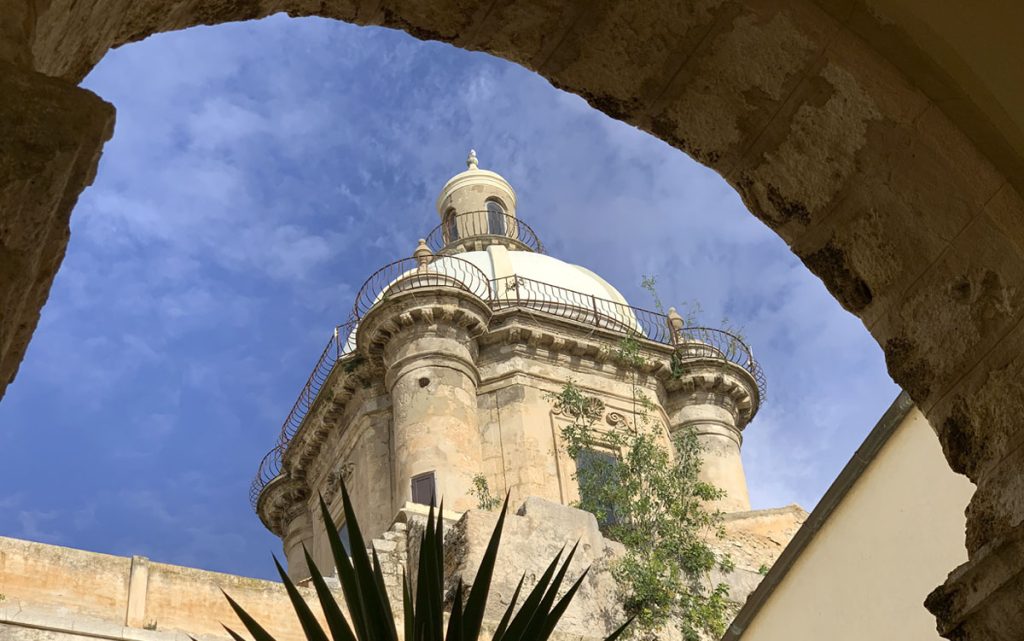
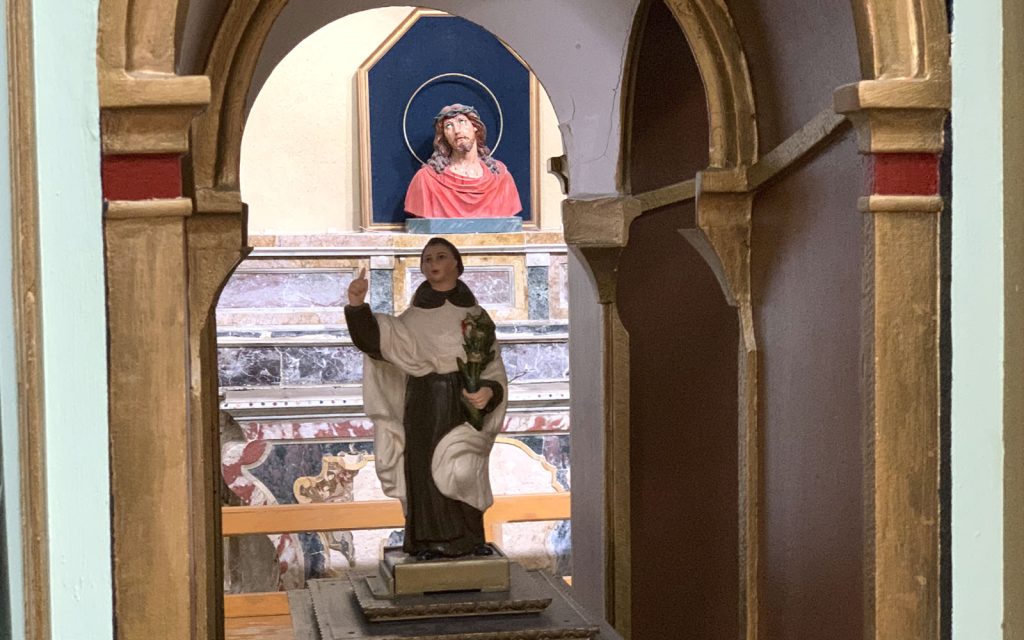
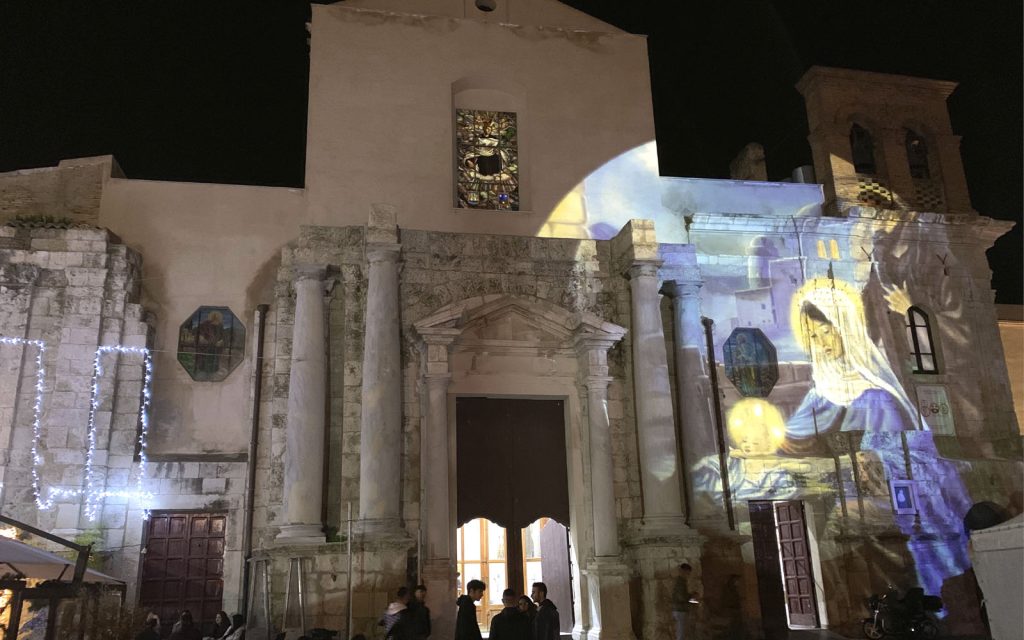
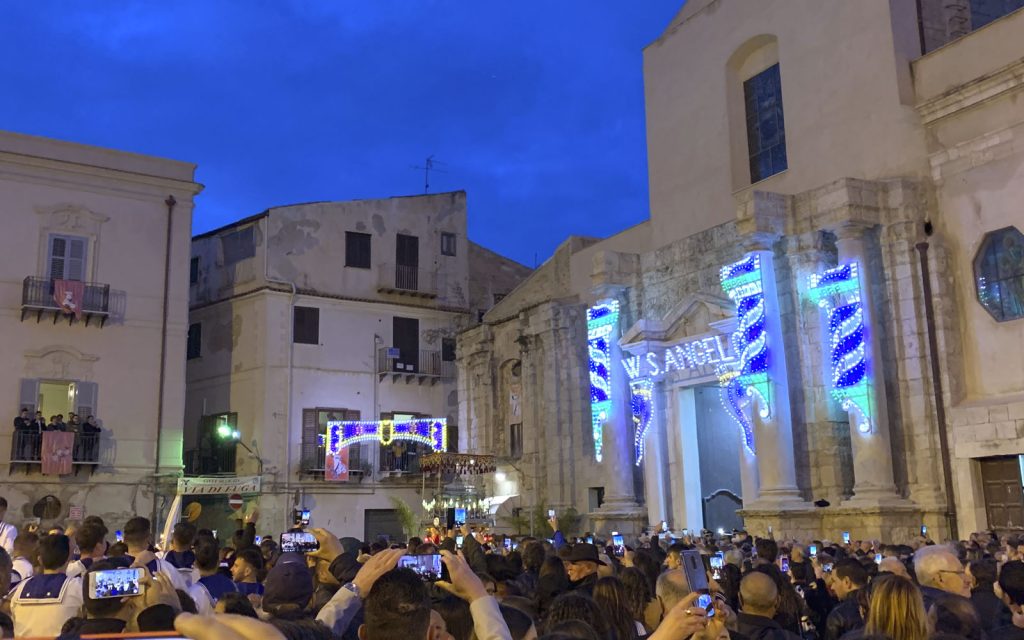
The Sanctuary of Sant’Angelo martyr is the patronal church dedicated to Carmelite saint who suffered martyrdom on 5 May 1220. The sanctuary stands on the ancient church of Filippo and Giacomo saints, the first protectors of Licata, which for its dimensions was narrow for numerous faithful. People thanks to their devotion, wanted to build a new and larger church on ruins of pre-existing one, and this happened in 1626, in thanksgiving to patron saint for the danger of the plague.
The work was carried out by architect Francesco Bonamici from Malta and later by architect Angelo Italia from Licata who failed to complete the prospectus, which was supposed to be majestic, like the Cathedral of the nearby Palma Di Montechiaro.
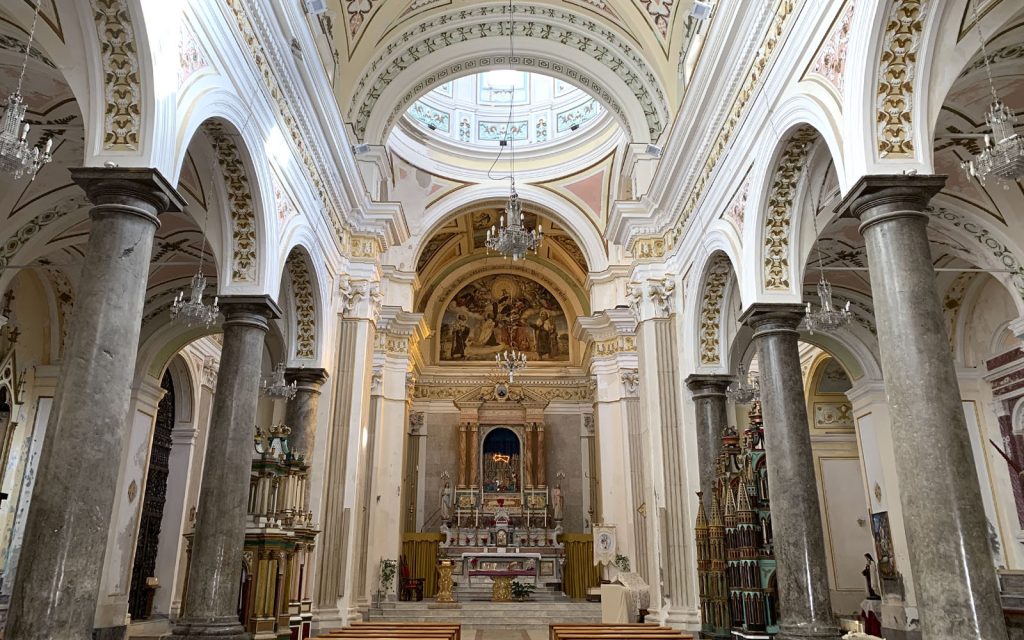
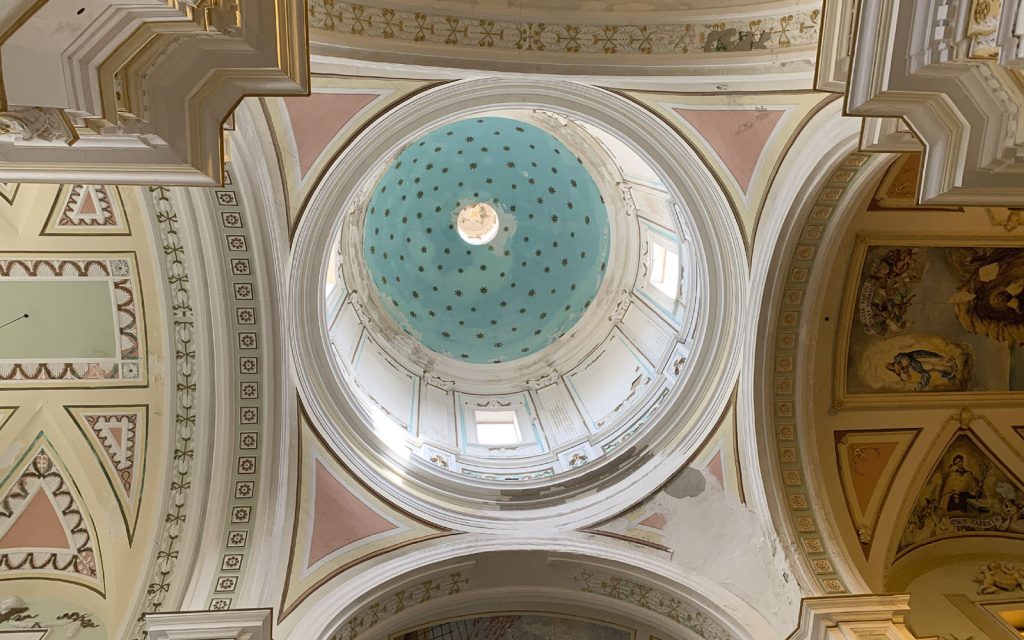
The interior with three aisles is monumental for the grandeur of the temple, for the bright colors used in the decorations and for the works of art preserved.
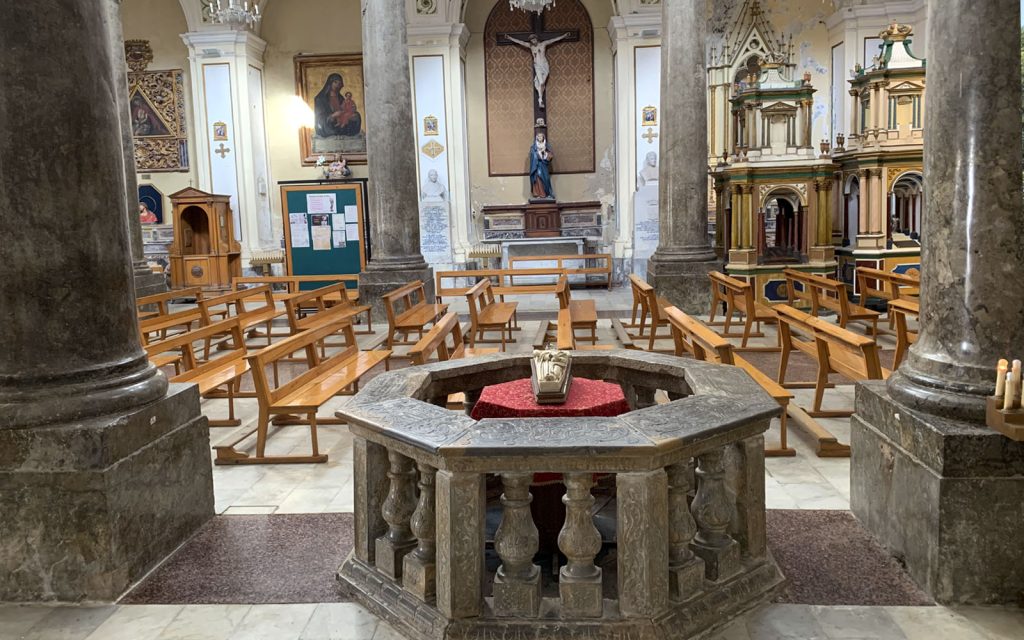
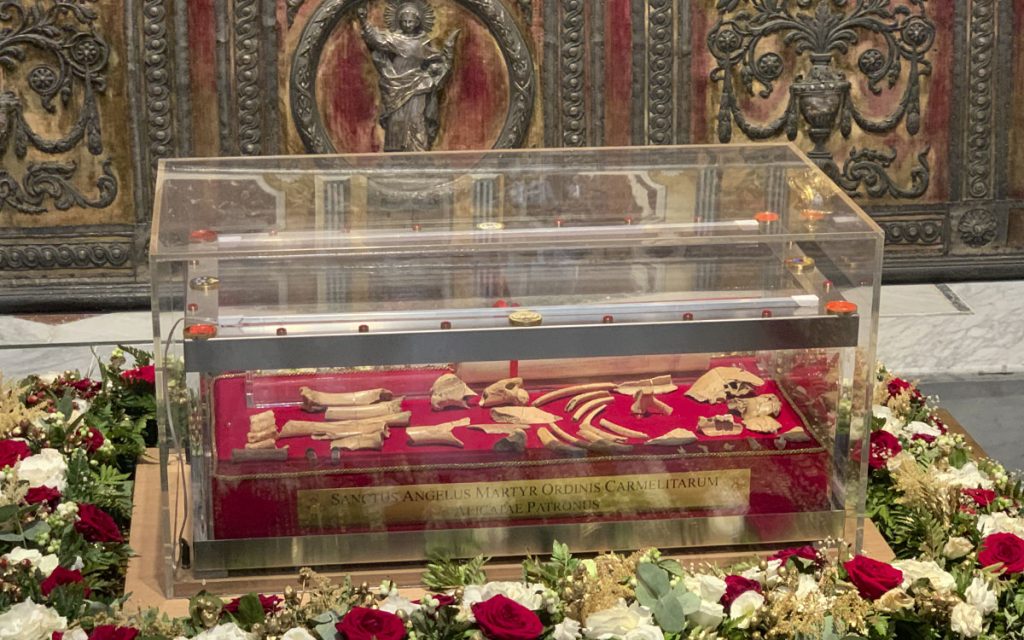
The most important place of devotion is the MIRACULOUS WELL identified as the first burial of the saint and from which miraculous events occurred, such as the spill of oil and water with thaumaturgical effects. People dug in that place and found human remains, which they attributed to Sant’Angelo. The relics were exhumed to be placed in a wooden urn.
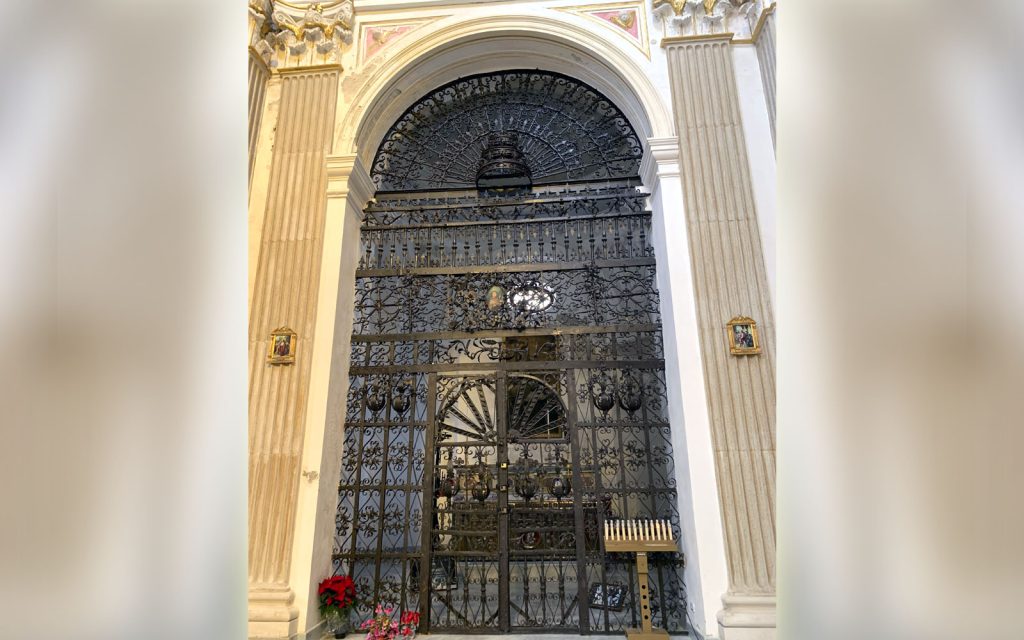
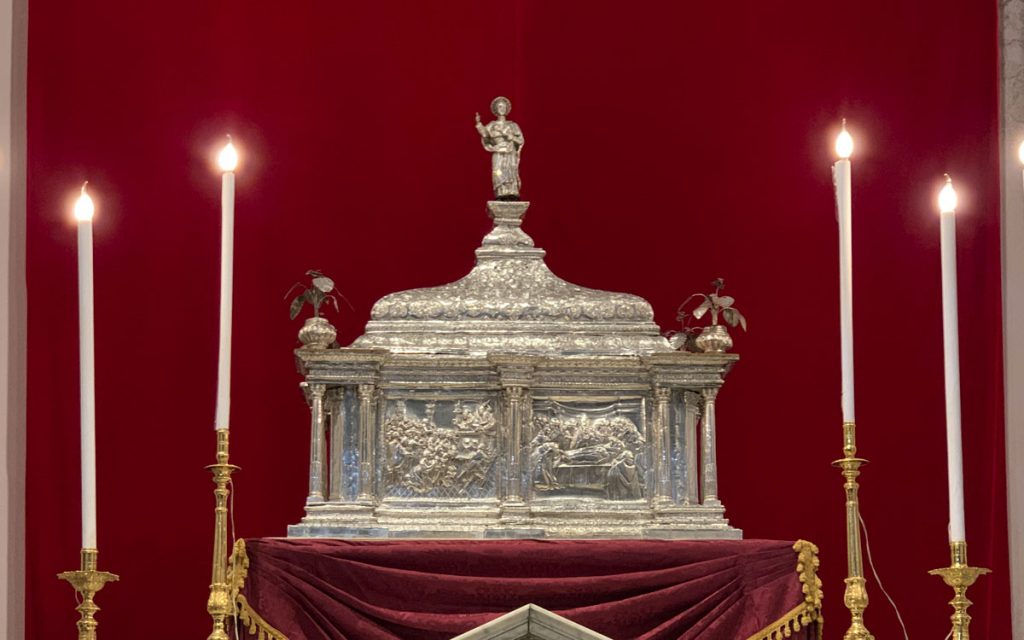
The silver urn, made in 1623 by goldsmith Lucio de Anizi from Ragusa and replacing the two previous ones, is kept in the chapel located in the left transept of the sanctuary and is protected by an artistic and decorated 17th century grille, closed by three keys.
In the church are preserved “ntorce” (votive candles) that accompany the Saint in procession on May 5, in the main feast. Alongside the four originals, there are as many that have been reproduced to be carried in procession. Next to the church stands the convent of the PP. Carmelites of the XVI sec. that until 1866, year of the suppression of the religious orders, remained occupied by the monks. The cloister houses the museum of the sea and the exhibition of the relics of the Second World War and of the Allied landing. One of the rooms is dedicated to folk singer Rosa Balistreri and it is used as a cultural centre.